THE DEFINITIVE GUIDE
North Park 101.
Everything you need to know about San Diego’s most walkable, most historic urban neighborhood- in one place.
North Park is the historic urban neighborhood in central San Diego, California (ZIP 92104), known for Craftsman bungalows, Spanish Revival architecture, the 30th Street food and beer corridor, and one of the highest walk scores in San Diego County.
Fast facts
- ZIP: 92104
- Population: ~43,000
- Median home price (2026): ~$1.15M
- Walk Score: 88 / 100
- Founded: 1893 (first subdivision)
- Main streets: 30th Street, University Avenue, Ray Street, Idaho Street
A short history
North Park got its name simply: it sits directly north of Balboa Park. The first lots were sold in 1893, but the neighborhood took shape between 1910 and 1940 as San Diego’s streetcars expanded north.
The Craftsman bungalow stock dates almost entirely from this era. After WWII, infill brought mid-century and Spanish Revival styles. The neighborhood declined in the 1970s-80s, then experienced a major revival starting in the late 1990s with the restoration of the North Park Theatre and the rise of the 30th Street food corridor.
The architecture
- Craftsman bungalows (1910-1930): The signature North Park style. Wood siding, deep porches, exposed rafters. Full guide →
- Spanish Revival (1920s-1930s): Tile roofs, arched openings, courtyards. Concentrated in Burlingame. Full guide →
- Mid-century (1950s-1960s): Post-war infill, clean lines, lower roofs.
- Mills Act eligible: Hundreds of North Park homes qualify for Mills Act property tax reduction. Mills Act guide →
The streets that matter
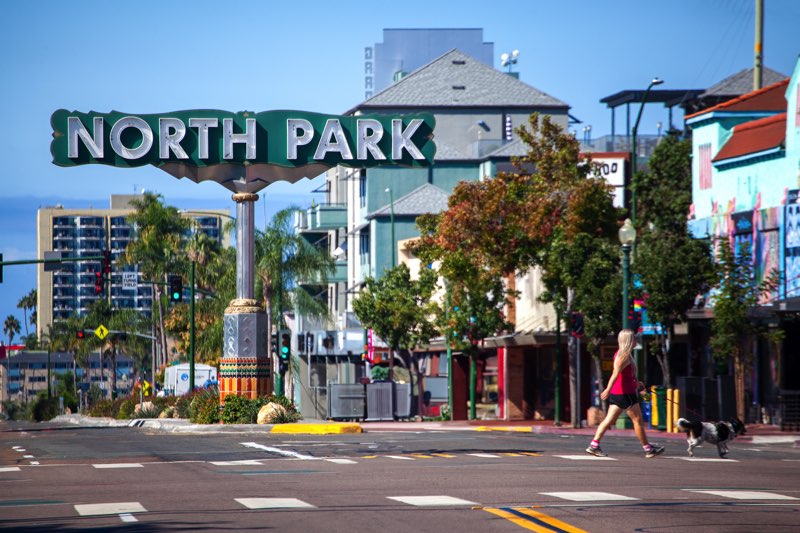
- 30th Street: the spine. Coffee, restaurants, breweries, and the North Park sign.
- University Avenue: the commercial corridor. Mix of retail, food, and services.
- Ray Street: the historic core. Art galleries, the original bungalow blocks.
- Idaho Street: the eastern edge, leading to Morley Field and Balboa Park.
What residents love (honest answer)
In order of how often we hear it: walkability, the food scene, the dog and stroller culture, the historic architecture, knowing your neighbors, the year-round weather, the variety of housing stock, and the strong sense of place.
What to know before moving here
Parking. Most of the original streets have no driveways or garages. Street parking can be tight, especially near the 30th Street corridor on weekends. If a driveway is non-negotiable for you, target Morley Field, Burlingame, or Greater North Park, not the historic core.
Noise. Streets within 2 blocks of 30th Street are louder than people expect, with nearby bars, restaurants, and occasional events. Quieter blocks: anything east of 32nd, or East of Alabama Street and West of 28th Street.
Older housing stock. Half of the North Park homes were built before 1940. Buying a Craftsman or Spanish Revival means accepting some quirks that come with older homes. For example, original windows, smaller closets, and older plumbing. The trade is a characteristic that no new build can replicate.
Want to know which pocket fits you?
The North Park Match Score takes 90 seconds and gives you a custom report, which streets to start with, what your budget actually buys, and three local spots to visit this weekend.